
Holding the Line: Anti-Poaching in Zambia’s GMA Buffer Zones
Updated: Apr 8
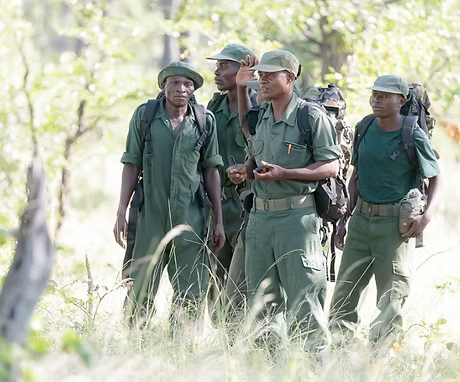
Anti-poaching is not a single program. It is not owned by any one organization or funded through any one channel. In Zambia’s Game Management Areas, effective protection is the product of a system — one that functions when its parts are aligned and degrades when they are not.
In the two GMA areas where we are active — Mumbwa West in the Kafue ecosystem and Chifunda in the upper Luangwa Valley — that system involves government game scouts, community resource boards, conservation organizations with long-term field presence, licensed operators, and a range of supporting partners. Each plays a different role. None is sufficient on its own.
Our role in that system is specific and limited. We are not the lead on anti-poaching in either area. What we can do — and do — is contribute to the margins of a system that others have built and continue to lead. Where that presence holds, wildlife holds. Where it does not, pressure moves in.
Who Leads Anti-Poaching Efforts
In Chifunda, the anchor organization for conservation and anti-poaching across the North Luangwa ecosystem is Frankfurt Zoological Society. FZS has been operating in this landscape for 38 years through the North Luangwa Conservation Programme — a formal partnership with DNPW that covers a vast area of the upper valley. The NLCP employs community game scouts, runs patrol programs, manages intelligence networks, and coordinates closely with DNPW enforcement across the park boundary and its surrounding buffer areas. Their presence predates ours by decades and operates at a scale and depth that no commercial partner could replicate.
In Mumbwa West, Musekese Conservation leads anti-poaching operations across the Kafue buffer zone in close partnership with African Parks, which manages Kafue National Park. Musekese operates patrol programs, supports community scout structures, and maintains the field intelligence networks that make enforcement in a large and remote landscape practical. The Mumbwa GMA Conservation Partnership Steering Committee — which includes DNPW, TNC, African Parks, Musekese, and community governance structures — provides the formal coordination framework within which all protection work is organized.
These are the lead actors. Everything else in the protection system — including what the licensed operators contribute and what we contribute alongside them — works in support of the structures they have built.
What the Operators Contribute
The licensed operators, Nedzo Safaris in Mumbwa West and Kovango Safaris in Chifunda, carry defined legal obligations under their Hunting Concession Agreements with DNPW. These include annual financial contributions to law enforcement operations, vehicles stationed at camp for patrol support, scout uniforms, and fuel for both DNPW and community resource board enforcement activities. Scout housing within the concession areas is part of the infrastructure that operators are expected to maintain.
These contributions are not discretionary. They are negotiated and signed before a concession is granted, with DNPW, community leadership, and traditional Chiefs all party to the agreement. The obligations exist regardless of what any individual season produces.
What We Contribute
Our contribution to anti-poaching in both areas sits alongside and in support of what the operators and conservation organizations are already doing. It is not a separate program. It is a set of practical inputs to a system that functions without us — but functions better with consistent support at the margins.
In practical terms, that has included providing vehicles for patrol transport when operator capacity is stretched, contributing to scout housing construction and maintenance, and supplying equipment and materials that improve the operational capacity of scouts working in remote areas. These are not headline contributions. They are the kind of unglamorous logistical support that determines whether a well-designed protection program can actually execute in the field.
Road maintenance is one of the less visible but more consequential inputs. In these landscapes, access determines protection. In both Mumbwa West and Chifunda, road conditions determine patrol reach. A track that becomes impassable in the late dry season is a track that wildlife — and those who would illegally take it — can use without interference. Using our equipment to maintain access roads extends the effective patrol coverage of scout teams operating in areas that would otherwise become difficult to monitor seasonally. DNPW approval is obtained for road work within concession areas.
The Community Dimension
The most durable form of anti-poaching protection in any GMA is not external enforcement. It is community investment in the system.
When communities have a genuine economic stake in wildlife — through employment, revenue sharing, infrastructure, and the kind of consistent benefit delivery that the concession framework requires — local knowledge flows toward protection rather than away from it. Community members who benefit from the presence of wildlife have reasons to report illegal activity, to discourage participation in poaching networks, and to act as an early warning system that no patrol program can replicate.
In both Mumbwa West and Chifunda, supporting community development is part of how the protection system works. Contributions to village infrastructure, clean water access, and the community projects that the CRBs identify as priorities are not separate from anti-poaching. They are part of the same logic: a community that benefits from wildlife is a community that protects it.
This is the dimension of protection that is hardest to measure and easiest to underestimate. It does not produce patrol statistics or interception reports. But it determines the environment within which all other protection efforts operate.
Scale and Honesty
It is worth being direct about what this contribution amounts to in the context of the full protection system. FZS has operated in the North Luangwa ecosystem for 38 years. Musekese Conservation and African Parks manage anti-poaching across the full Kafue buffer zone. DNPW employs and oversees the scouts who conduct the majority of enforcement activity across both landscapes.
What we contribute is real and it matters at the margin — but the margin is where we operate. The system that protects these landscapes was built by others, is led by others, and would continue without us. Our role is to support it, strengthen it where we can, and avoid doing anything that undermines it.
That is an honest description of where we fit. It is also, we think, the right way to participate in a protection system that depends on alignment across many actors rather than the dominance of any single one.
Why This Matters for the Buffer Zones
Both Mumbwa West and Chifunda sit in ecologically critical positions. Mumbwa West borders Kafue National Park — one of Africa’s largest protected areas. Chifunda holds more than 40 miles of Luangwa River frontage directly across from North Luangwa National Park, buffering a park that is home to one of the continent’s most significant black rhino recovery programs.
Illegal hunting pressure in both landscapes is real and continuous. It does not pause between seasons. The river corridors that define both areas are both wildlife arteries and access routes for people operating outside the law. Maintaining effective protection coverage along those corridors — year-round, not just during commercial seasons — is what determines whether the buffer zones function as intended.
Anti-poaching in these landscapes is not defined by a single program or a single actor. It is defined by whether presence is sustained — across seasons, across years, across the full extent of the landscape. When that presence holds, buffer zones function. When it weakens, they do not. This is what protection looks like in practice.
This is one landscape. The record continues.
All concession activity in Mumbwa West GMA and Chifunda GMA is conducted under Hunting Concession Agreements held by the licensed operators, Nedzo Safaris and Kovango Safaris respectively, and within the regulatory framework of the Department of National Parks and Wildlife of Zambia. Epic Safaris holds marketing rights associated with hunting quotas and participates as a conservation and community partner in support of those structures.


Comments